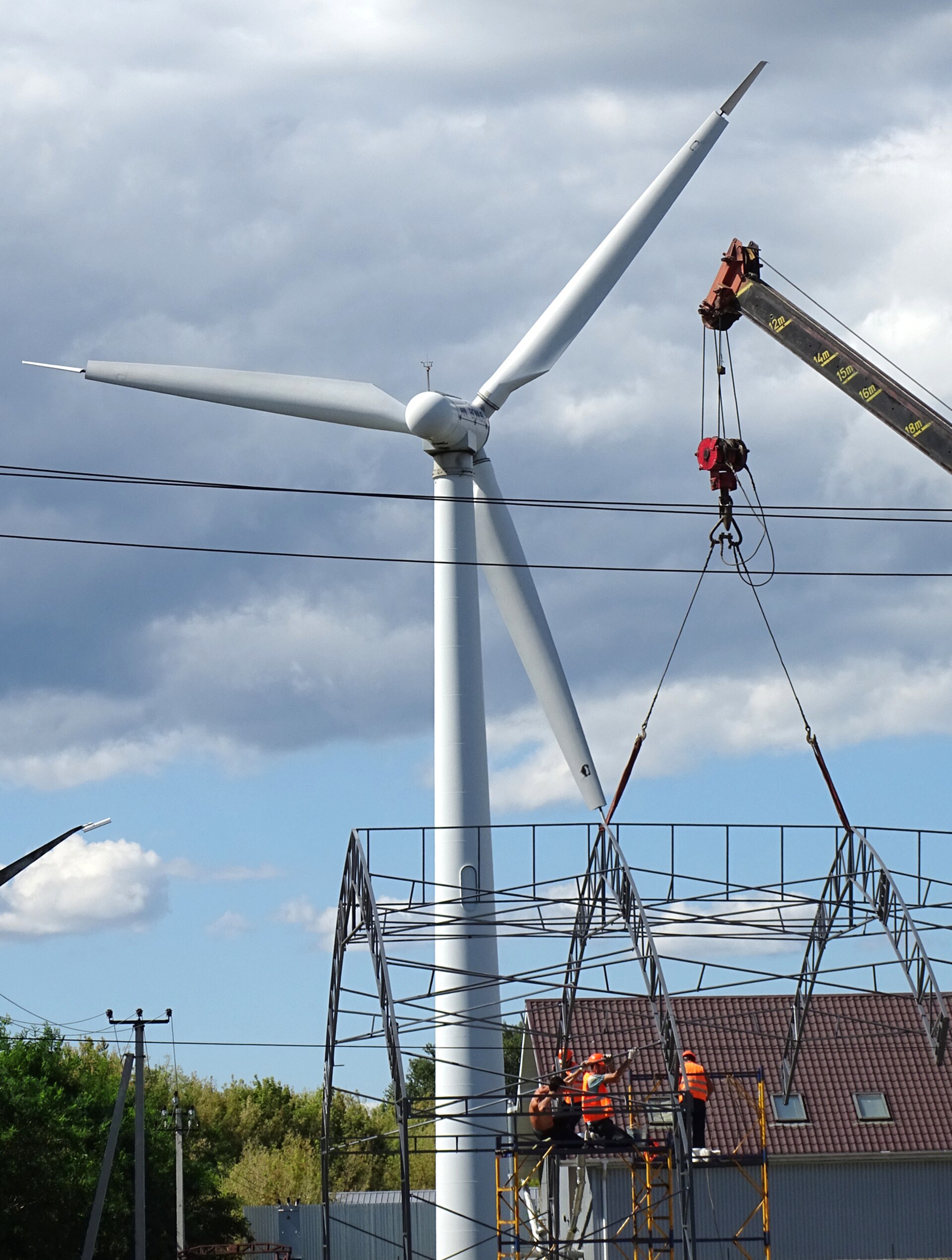
A recent Social Europe essay argues that corporate climate plans need workers’ involvement, not just disclosure, citing the 12,000 steelworkers who marched in Duisburg in support of green steel. The Duisburg case shows both sides of worker voice in the climate transition: organised workers helped secure €2 billion in public funding for low-carbon steel, but could not prevent plans to cut thousands of jobs. This brief draws out the lessons for Georgia, where institutions for worker participation are far weaker.
Key Points
- On 14 June 2023, around 12,000 steelworkers took part in an IG Metall action day in Duisburg calling on the German government to deliver promised funding for green steel (IG Metall, 2023; dpa, 2023).
- Funding of €2 billion followed — €1.3 billion from the federal government and €700 million from North Rhine-Westphalia — for a hydrogen-ready direct reduction plant intended to make 25% of Duisburg’s steel production climate-neutral (IG Metall, 2023).
- Thyssenkrupp Steel later announced plans to reduce its workforce from 27,000 to 16,000 over six years, with Duisburg, where around 13,000 jobs are based, particularly affected (CIO/dpa, 2024).
- Worker voice in Germany operates through works councils, board-level representation and sectoral unions — institutions largely absent in Georgia.
1. Context
Most corporate climate regulation focuses on disclosure: companies must report emissions and transition plans. The Social Europe essay argues that disclosure alone is insufficient and that employees should have a voice in how transition plans are designed, because worker involvement can accelerate the transition rather than block it (Social Europe, n.d.). The ILO’s Guidelines for a just transition (2015) similarly place social dialogue at the centre of climate policy.
2. The Duisburg Case
In June 2023, steelworkers organised by IG Metall rallied in Duisburg to press the federal government to honour its promise of funding for low-carbon steel. The works council chair of Thyssenkrupp Steel Europe argued that the workforce was ready to produce green steel if allowed to (IG Metall, 2023). The government subsequently approved €2 billion in support for a direct reduction plant, intended to operate on climate-neutral hydrogen (IG Metall, 2023; dpa, 2023).
Worker support for the transition did not, however, protect employment. Facing weak demand and import competition, Thyssenkrupp Steel announced plans to cut its workforce from 27,000 to 16,000 within six years (CIO/dpa, 2024). The union’s role then shifted from campaigning for investment to negotiating the terms of restructuring.
| Indicator | Value | Source |
|---|---|---|
| Steelworkers at IG Metall action day (14 June 2023) | ≈12,000 | IG Metall; dpa (2023) |
| Public funding for green steel | €2.0bn (€1.3bn federal, €0.7bn NRW) | IG Metall (2023) |
| Share of Duisburg steel to become climate-neutral | 25% | IG Metall (2023) |
| Thyssenkrupp Steel workforce: current / planned | 27,000 / 16,000 | CIO / dpa (2024) |
| Jobs based in Duisburg | ≈13,000 | CIO / dpa (2024) |
3. Analysis
Worker voice can accelerate transition
The Duisburg case supports the essay’s central claim: organised workers were advocates for, not opponents of, decarbonisation, and their mobilisation helped unlock public investment. Where workers have a recognised voice, they can align climate goals with the interest in keeping industrial jobs.
Counter-argument: voice does not guarantee jobs
The later job cuts show the limits. Market conditions, energy costs and global competition shape outcomes more than any single agreement. Worker voice can influence investment and the terms of restructuring, but it cannot override economics. That is not an argument against participation; it is an argument for involving workers early, so that retraining and redeployment are planned rather than improvised.
4. Implications for Georgia
Georgia’s capacity for this kind of worker participation is limited. Trade union membership covers at most around one in six employees, the Tripartite Social Partnership Commission meets irregularly and has no binding role, and there is no system of works councils or board-level representation (see related GILS analyses). As Georgia aligns with EU climate and energy policy as part of its association process, industrial and energy transitions will affect workers in mining, metallurgy, energy and transport. Without institutions for social dialogue, these transitions are likely to be negotiated — if at all — after decisions have been taken.
GILS Recommendations
- Adopt a just transition framework based on the ILO Guidelines, covering sectors most exposed to climate and energy policy.
- Require consultation with workers’ representatives on corporate transition plans in large enterprises in carbon-intensive sectors.
- Use the Tripartite Commission as a forum for sectoral transition planning, with a defined mandate and timelines.
- Link public support for green investment to employment plans, including retraining and redeployment commitments.
GILS Position
Climate transition is also a labour market transition. Duisburg shows that workers can be allies of decarbonisation when they have a voice. Georgia should build that voice before, not after, its own transitions begin.
References
- Social Europe (n.d.). Climate plans need workers, not just disclosure. socialeurope.eu
- IG Metall (2023). Beschäftigte kämpfen für grünen Stahl, and Fördergelder für grünen Stahl bewilligt. igmetall.de
- dpa-AFX (2023). Großanlage für grünen Stahl: Habeck-Zusage aus Brüssel. Via Börse Online. boerse-online.de
- CIO / dpa (2024). Thyssenkrupp Stahl will tausende Jobs streichen. cio.de
- ILO (2015). Guidelines for a just transition towards environmentally sustainable economies and societies for all. Geneva: International Labour Organization.
Suggested citation: GILS Research Team (2026). Climate Plans Need Workers: Lessons from Duisburg for Georgia. GILS Brief. Editor: G. Pkhakadze. Georgian Institute of Labour Studies, Tbilisi. labour.edu.ge
GILS analyses are prepared with AI-assisted drafting. All figures and claims are verified against the cited primary sources and reviewed under the responsibility of the Editor.