GILS Decent Work Scorecard for Georgia: 15 Indicators, Sourced — and Why We Withdrew a Single-Number Index
An earlier version of this page presented a single "Decent Work Index" score for Georgia. GILS could not document the methodology and data behind that score to the standard we now require, and…

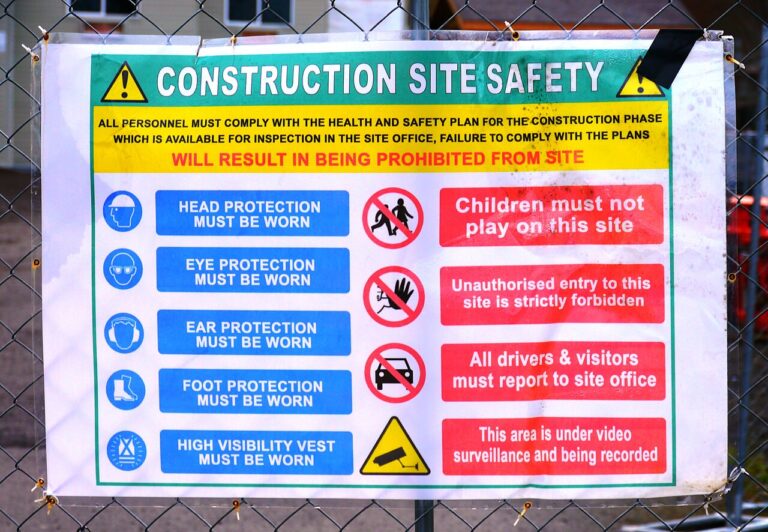
Labour Inspection in Georgia Five Years After the Full Mandate: More Inspections, an Unratified Convention — and the Evidence Still Missing
Georgia's Labour Inspection Service has had a full mandate only since 2021. Inspections have grown fast, but ILO Convention No. 81 is still unratified, staffing data are out of date and evidence on whether violations are corrected is limited.
Read more →
AI, Skills and Young Workers in Georgia: What the ILO's 2026 Evidence Says — and What It Doesn't
The ILO's 2026 reports identify the accelerating adoption of artificial intelligence as one of the risks facing labour markets, while finding that AI-specific skills are still a small part of…
Read more →
Georgia and the ILO's Lifelong Learning and Skills Report: Vocational Reform, Adult Learning and the Apprenticeship Standard
In May 2026 the ILO published Lifelong learning and skills for the future, a World of Work report arguing that lifelong learning must become a central pillar of economic and social policy. This…
Read more →
Georgia and the ILO's Employment and Social Trends 2026: How Georgia Compares with the Global Picture
In January 2026 the ILO published Employment and Social Trends 2026, its annual flagship assessment of the world's labour markets. Its central message — headline stability masking stalled…
Read more →
Georgia's NEET Challenge: Why Young Women and Graduates Are Most at Risk of Being Left Out
Roughly three in ten young Georgians aged 15–29 have been found to be neither in employment, education nor training (NEET). Among teenagers the NEET share has been falling, mainly because more…
Read more →
Georgia's Small-Business Tax Cliff: How Micro and Small Business Regimes Can Discourage the First Formal Hire
Georgia's special tax regimes for micro and small businesses are among the most generous in the region: zero tax on turnover below GEL 30,000, and 1% on turnover up to GEL 500,000. They have…
Read more →
Where Work Pays Least in Georgia: The Sector, Gender and Public-Sector Roots of Low Pay
Average earnings in Georgia have risen fast — to GEL 2,466 per month by the end of 2025. But the gains are distributed very unevenly. Employees in information and communication earn more than…
Read more →
Remittances Are Holding Georgia Together — But For How Long?
Remittances have long been one of Georgia's largest sources of foreign income. Between 2021 and 2024 their composition changed dramatically: transfers from Russia surged five-fold in 2022 and…
Read more →
Georgia's Gender Pay Gap: An 11% Adjusted Gap, a One-Third Raw Gap — and an Equal Pay Law Too Narrow to Close It
Georgian women earn about a third less than men on average. Since 2022, Geostat has also published an adjusted gender pay gap — the gap that remains after accounting for differences in age,…
Read more →
Georgia's Social Assistance: One in Five Residents Covered, Benefits Below Subsistence — and a Work Penalty
Georgia's Targeted Social Assistance programme reaches more than 700,000 people — around one in five residents, including nearly a third of all children — even though official absolute poverty…
Read more →
Georgia's Public Service Law After the 2024–2025 Amendments: What Changed for Public Servants' Job Protection
Georgia's 2015 Law on Public Service was designed, with international support, to build a merit-based and stable civil service. Since December 2024, Parliament has amended it four times. Civil…
Read more →
Georgia's Employment Promotion Law: A Framework for Job Seekers, Not Yet a System for the Unemployed
Georgia's Law on Employment Promotion, adopted in July 2020, was the country's first comprehensive legal framework for public employment services. It created the State Employment Support Agency,…
Read more →
Disability and Work in Georgia: Stronger Laws, Very Low Employment — and a Data Gap
Since 2020 Georgia has adopted a Law on the Rights of Persons with Disabilities, introduced a duty of reasonable accommodation in the Labour Code and created protected workplaces and supported…
Read more →
37% of Georgia's Workers Are Informally Employed: Who They Are, Where They Work, and Why Informality Persists
According to the ILO's most recent analysis of Georgian Labour Force Survey data, 37.1% of employed people in Georgia worked informally in 2022. The profile that emerges is not the one usually…
Read more →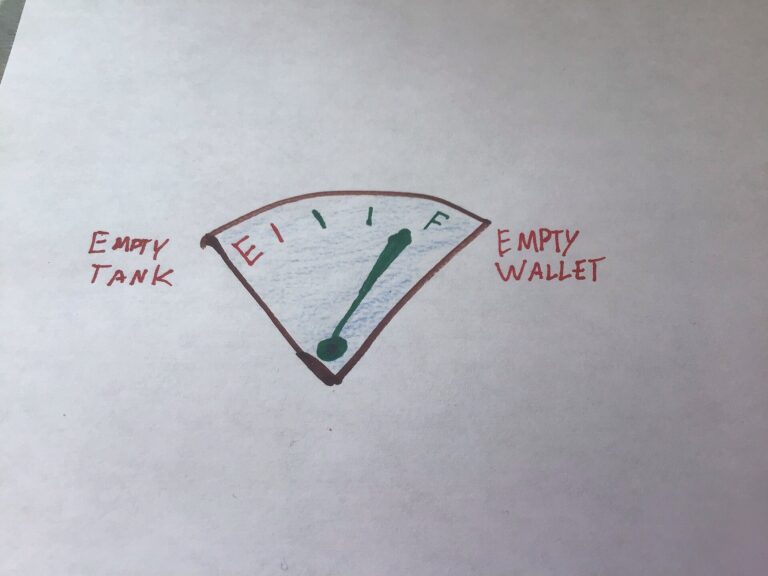
Working Poverty in Georgia: Why Having a Job Is No Longer a Guarantee Against Poverty
Georgia has made striking progress against poverty: the share of the population below the absolute poverty line fell from 11.8% in 2023 to 7.1% in 2025. Yet the country does not measure how many…
Read more →
How Many Georgians Live Abroad? What the Migration Data Actually Show — and Why the Labour Market Should Care
Claims that 1.5 million Georgians work abroad circulate widely, but they are not supported by official data. United Nations estimates put the number of people born in Georgia and living abroad…
Read more →
Georgia’s Tripartite Commission: A Broad Mandate, Limited Results — and the Design Changes That Could Help
Georgia created a Tripartite Social Partnership Commission in 2009 and gave it a statutory basis in 2013. Its stated purpose is to promote social dialogue between government, employers and…
Read more →
The 2022 GTUC–GEA Memorandum: Social Partners' Cooperation on the Minimum Wage — and the Steps Still Needed
On 21 October 2022, the Georgian Trade Unions Confederation (GTUC) and the Georgian Employers' Association (GEA) signed a memorandum of cooperation committing them to develop joint positions on…
Read more →
Who Documents Labour Rights Violations in Georgia? Independent Unions, Civil Society and the Labour Inspection Service
Who documents labour rights violations in Georgia? Alongside the Labour Inspection Service and the Public Defender, independent unions and civil society organisations — the Solidarity Network,…
Read more →
Trade Union Membership in Georgia: Roughly One in Six Employees — and Why Organisation Still Matters
Georgia does not publish an official trade union density statistic. Using the membership figure reported by the Georgian Trade Unions Confederation and Geostat's count of hired employees, GILS…
Read more →
Why Georgia Needs Independent Labour Research: The Evidence Gaps — and the Standards GILS Holds Itself To
Georgia makes consequential decisions about wages, labour law and social protection with significant gaps in the evidence. In reviewing every article on this site against primary sources during…
Read more →
Georgia's Minimum Wage Has Been GEL 20 Since 1999: The Numbers, the Reform Proposals, and What a Credible Law Would Need
Georgia's minimum wage for the private sector is GEL 20 a month, set by presidential order in 1999 and never revised. It is equal to less than 1% of average monthly earnings and less than a…
Read more →
Youth Unemployment in Georgia: Falling Rates, Shrinking Participation — Why the Headline Hides an Exit
Georgia's youth unemployment rate (ages 15–24) fell from 39% in 2020 to 34.5% in 2023. At first sight this is good news. But over the same period the number of employed young people did not rise —…
Read more →
Labour Underutilisation in Georgia Is Double the Headline Unemployment Rate: What the LFS Misses
In 2024 Georgia's unemployment rate fell to 13.9%, down 2.5 percentage points on the previous year. Yet the ILO's composite measure of labour underutilisation stood at 28.8% — more than twice as…
Read more →
Education Mismatch in Georgia: 27% of Workers Are Overeducated for Their Jobs — While Employers Report Skill Shortages
A June 2026 IMF analysis of Georgian Labour Force Survey microdata finds that 27% of prime-age workers and 36% of young workers were overeducated for their jobs in 2024, and that about 40% of…
Read more →
Georgia Has Not Ratified the ILO's Fundamental Safety Conventions: Why C155 and C187 Matter
In 2022 the International Labour Conference made a safe and healthy working environment a fundamental principle and right at work, raising the ILO's two framework conventions on occupational…
Read more →
Georgia's First Decent Work Country Programme (2024–2026): Two Priorities, Nine Outcomes — and the Questions It Leaves Open
On 13 August 2024, the Government of Georgia, the Georgian Trade Unions Confederation, the Georgian Employers' Association and the ILO signed Georgia's first Decent Work Country Programme. It is…
Read more →
Georgia's Equality Law After the 2025 Amendments: What Changed — and What It Means for Women at Work
Georgia's Law on Gender Equality, adopted in 2010, was renamed and amended in April 2025: the term "gender" was removed from it and from related laws and replaced with "equality between women…
Read more →
Collective Bargaining in Georgia: Why Coverage Is Not Yet Measured
How many Georgian workers are covered by a collective agreement? No one can say with confidence: Georgia publishes no official statistic on collective bargaining coverage, and figures in…
Read more →
Georgia's Labour Code Since 2006: From Deregulation to EU Approximation — and the Gaps That Remain
Georgia's Labour Code, adopted in 2006, offered workers minimal protection, and its first years coincided with the abolition of labour inspection. Two major reforms — in 2013 and 2020 — rebuilt…
Read more →
Georgia's Anti-Discrimination Law at Ten Years: 1,363 Cases, a Stronger Mandate — and Weak Remedies for Workers
Georgia's Law on the Elimination of All Forms of Discrimination was adopted on 2 May 2014, creating an equality mechanism within the Public Defender's Office. In its first ten years the Public…
Read more →
Georgia's Pension System Seven Years After the 2019 Reform: GEL 8.2 Billion Saved, but Coverage and Adequacy Gaps Remain
Seven years after Georgia introduced a funded pension scheme, its assets have passed GEL 8.2 billion and it has more than 1.7 million participants. But the scheme is built on formal wage…
Read more →
2027 Budget: Pensions Rise by GEL 20–60 While Top Officials' Salaries Rise 8% — What the Indexation Rule Delivers
Georgia's draft 2027 state budget raises the basic pension for people under 70 by GEL 20, to GEL 390 a month, and for those aged 70 and over by GEL 60, to GEL 555. Salaries of members of…
Read more →
Georgia Wire: The Labour Market in 2025 — Steady Unemployment, Falling Participation, and What the Headline Misses
After a strong 2024, Georgia's labour market stalled in 2025. The unemployment rate stayed at 13.9%, while participation and employment rates edged down, women's participation fell, unemployment…
Read more →
Georgia Wire: Parliament Hears the Labour Inspection Service's 2025 Report — Five Years After the Full Mandate
Parliament's Economic Policy Committee has heard the Labour Inspection Service's report for 2025: 7,111 inspections, 3,709 facilities inspected for the first time, and a reported 46% fall in…
Read more →
Georgia Wire: Q2 2026 Labour Force Survey — Unemployment Falls to 13.8%, but Fewer People Are in Work
Geostat's second-quarter 2026 Labour Force Survey shows unemployment down to 13.8%. But participation fell faster, and the employment rate dropped to 46.0%. For the second quarter running, the…
Read more →
Georgia Wire: Fixed-Term Contracts in Georgian Labour Law — What the 2013 and 2020 Reforms Changed, and What Remains
Before 2013, most employment contracts in Georgia were short fixed-term contracts, renewed again and again. The 2013 and 2020 Labour Code reforms set limits: fixed-term contracts of less than a…
Read more →
Georgia Wire: Domestic Workers Remain Outside the Labour Code — What the Evidence Shows as the ILO Raises the Issue
Domestic workers — nannies, cleaners, carers and cooks working in private homes — remain outside the effective protection of Georgia's Labour Code. The best available estimate puts their number…
Read more →
Georgia Wire: What Employers Have Asked for in Labour Code Reform — From the 2013 Amendments to the 2020 Package
Georgia's two major Labour Code reforms — in 2013 and 2020 — were both shaped by intense lobbying from business associations. Employers sought flexibility on working time, termination and…
Read more →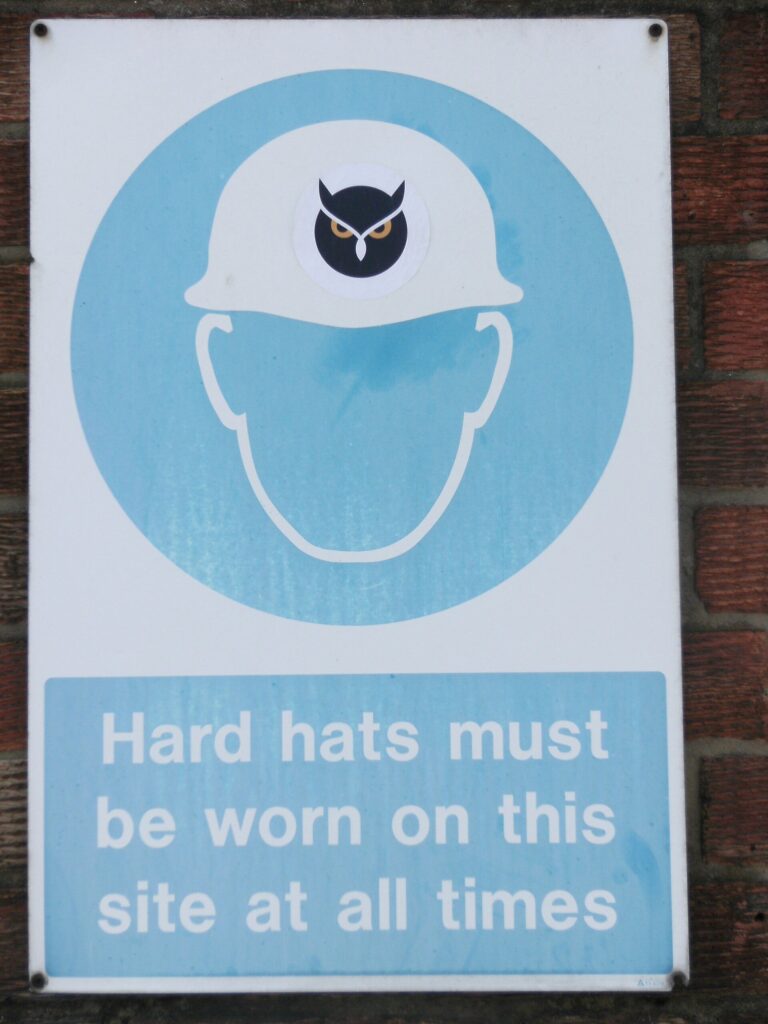
Georgia Wire: 32 Workplace Deaths in 2025, Two-Thirds in Construction — What the Labour Inspection Data Show
The Labour Inspection Service recorded 32 workplace deaths and 179 injuries in 2025, and reported a 46% fall in fatal accidents compared with the previous year. Construction accounted for 21 of…
Read more →
Climate Plans Need Workers, Not Just Disclosure: Lessons from Duisburg for Georgia
A recent Social Europe essay argues that corporate climate plans need workers' involvement, not just disclosure, citing the 12,000 steelworkers who marched in Duisburg in support of green steel.…
Read more →
Legal Labour Migration from Georgia: 90,000 Applicants, a Few Thousand Places — Lessons from the Germany Seasonal Scheme
The European Training Foundation's work on "skills for fair, efficient labour migration" places skills at the centre of migration policy. Georgia's own experience shows why. When a seasonal work…
Read more →
Pro-Worker Trade Policy: What Georgia's EU Free Trade Agreement Shows About Labour Standards — and Their Limits
A recent Social Europe essay argues for moving beyond the choice between free trade and protectionism towards a pro-worker trade policy, proposing four changes ranging from enforceable labour…
Read more →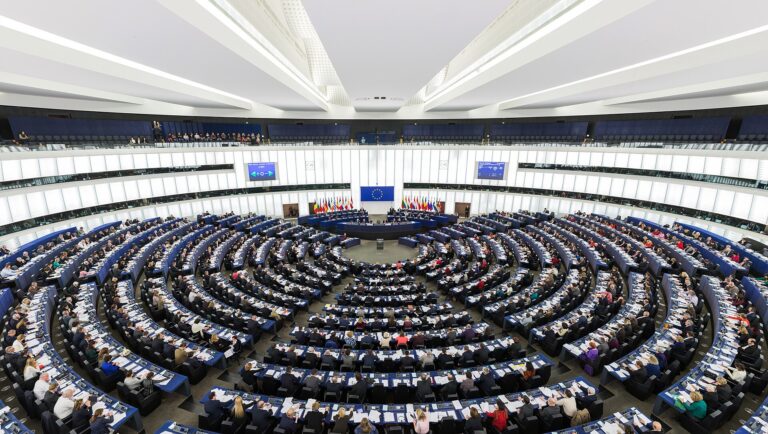
The EU Minimum Wage Directive After the 2025 Court Ruling: What Alignment Would Mean for Georgia
The EU's Directive on Adequate Minimum Wages, adopted in October 2022, was largely upheld by the Court of Justice in November 2025. As an EU candidate, Georgia will be expected to move towards…
Read more →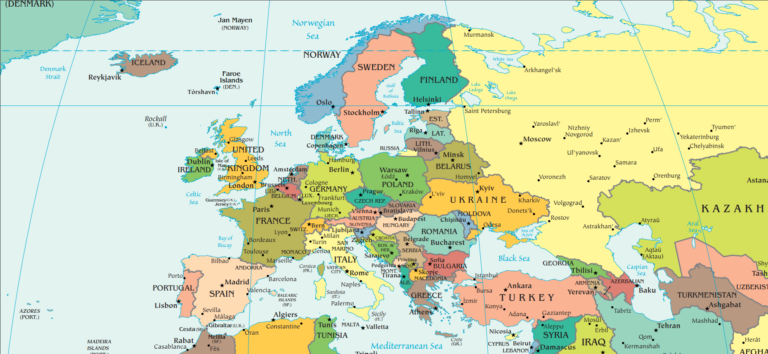
How Georgia's Labour Market Compares with Its Eastern Neighbours and the EU: Highest Unemployment, Highest Youth Unemployment
How does Georgia's labour market compare with its neighbours? Eurostat's statistics for the EU's Eastern Neighbourhood show that in 2021 Georgia had the highest unemployment rate and the highest…
Read more →
The EU Platform Work Directive: What a Presumption of Employment Would Mean for Georgia's Couriers
The EU's Platform Work Directive, adopted in October 2024, introduces a legal presumption that platform workers are employees when a platform directs and controls their work, and new rules on…
Read more →
Do Minimum Wages Cost Jobs? What the German and US Evidence Shows — and What It Means for Georgia
Opponents of a meaningful minimum wage in Georgia often argue that it would destroy jobs. A large body of recent research from Europe and the United States finds that well-designed minimum wage…
Read more →