An ILO preliminary assessment of the 2026 Nepal floods identifies labour-market vulnerabilities that extend well beyond disaster zones, offering transferable insights for economies with high informality and remittance dependence.
Key Findings
- The ILO estimates that approximately 21,400 employed people live within four kilometres of the flood footprint in Nepal, with economic disruption spreading through supply chains far beyond that radius (ILO, 2026).
- Informal, daily-wage and casual workers face heightened income insecurity, while the assessment warns that severe household income losses may increase the risk of child labour as a negative coping strategy (ILO, 2026).
- Two overland trade corridors—Rasuwa and Tatopani—accounted for roughly 22 per cent of Nepal’s imports from China over the preceding year, and flood damage to these routes could affect workers in wholesale, retail, construction and manufacturing sectors (ILO, 2026).
- Women workers are identified as particularly exposed, facing the dual burden of lost paid employment and increased unpaid care responsibilities (ILO, 2026).
- The ILO recommends immediate income support, employment-intensive reconstruction and targeted skills-development programmes as priority recovery measures (ILO, 2026).
1. What the ILO Assessment Finds
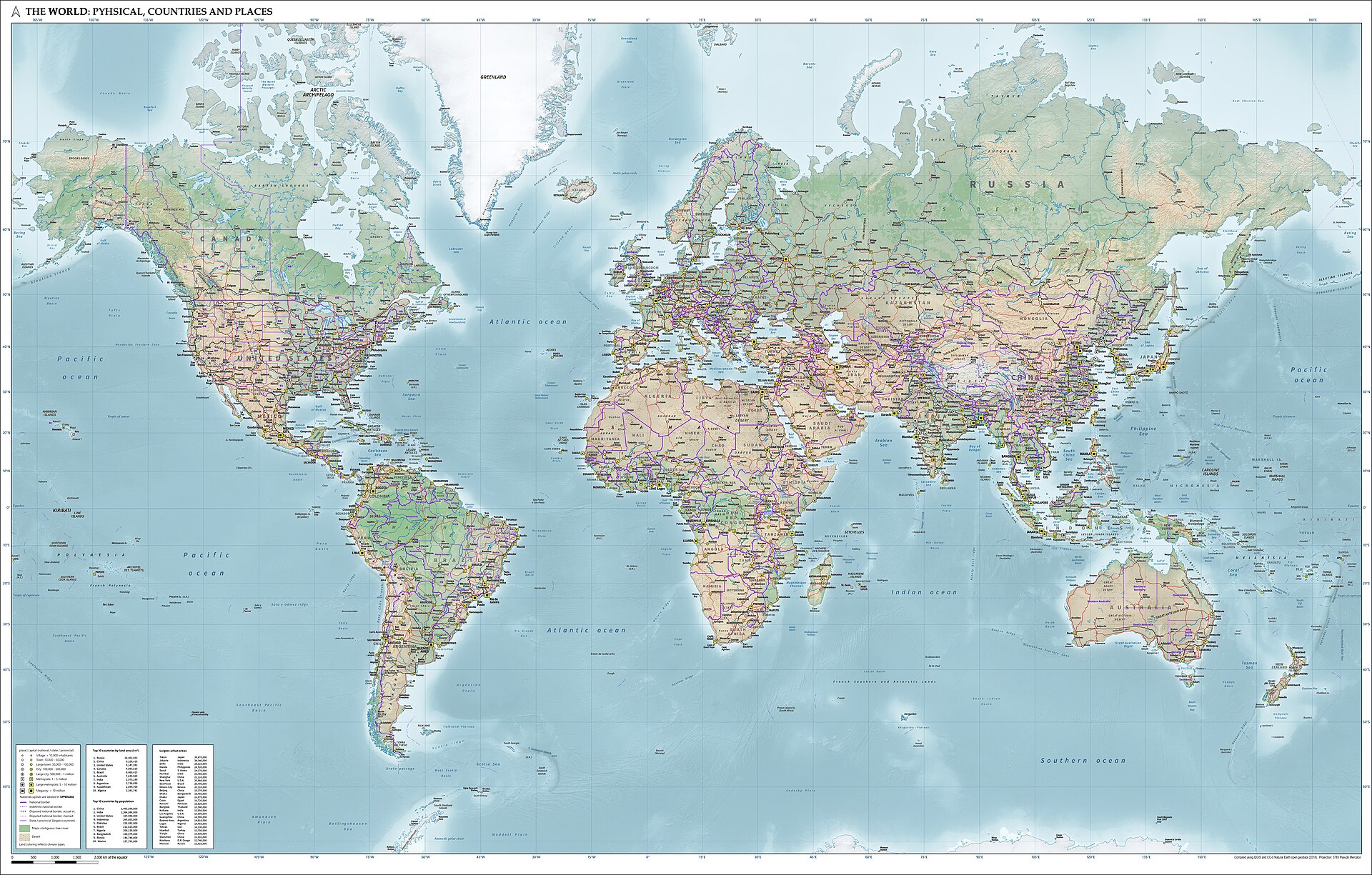
Flash flooding in northern Nepal in late August 2026, triggered by a glacier collapse on the Nepal–China border, resulted in more than 1,450 deaths and left 5,786 people still missing, according to Nepali authorities (ILO, 2026). The destruction encompassed homes, workplaces, roads, bridges and energy infrastructure, creating immediate and cascading disruptions to employment across multiple sectors.
The ILO’s preliminary assessment emphasises that employment consequences extend beyond the directly inundated areas. Damage to transport links, electricity networks and trade routes transmits economic shocks through supply chains and connected markets, affecting workers and enterprises at considerable distance from the flood zone (ILO, 2026). Sectors identified as particularly exposed include tourism—guides, porters, hotel and restaurant staff—as well as agriculture and transport, where workers may encounter reduced earnings, interrupted activity and impaired access to customers and inputs.
Nepal’s elevated level of informal employment amplifies these risks, as many workers lack adequate income-smoothing mechanisms or social protection coverage (ILO, 2026). The assessment places daily-wage, casual and self-employed workers, together with operators of micro- and home-based businesses, in the highest-risk category. It further flags the gendered dimension of the shock: women are liable to experience lost paid work alongside heightened unpaid care burdens.
Trade-corridor disruption adds a macroeconomic dimension. The two principal overland routes to China—Rasuwa and Tatopani—handled around 22 per cent of Nepal’s imports from China over the prior year, with Rasuwa alone accounting for nearly half of exports to China (ILO, 2026). Disruption to these corridors could ripple into wholesale and retail trade, construction, manufacturing and agricultural processing, sectors that depend on imported inputs or export markets.
On the policy side, the ILO assessment concludes that recovery and reconstruction offer an opportunity to protect livelihoods while generating decent employment. Recommended measures include immediate income support for affected households and businesses, employment-intensive reconstruction approaches, and job-matching and skills-development initiatives (ILO, 2026).
2. What It Means for Georgia
Georgia’s labour market presents a structural profile that shares several characteristics highlighted in the Nepal assessment, making the ILO’s findings analytically relevant even though they concern a distinct hazard context. Informal employment accounted for 37.1 per cent of total employment in 2022 (Pignatti, 2026, ILO Working Paper 159), a share broadly comparable to levels observed in lower-middle-income economies where informal workers bear the largest income shock when supply chains are disrupted.
The country’s dependence on remittances adds further vulnerability. Emigrants numbered 121,425 in 2024 (Geostat, 2025), and money transfers reached USD 3.36 billion over the same year (National Bank of Georgia, 2025). A natural disaster or supply-chain disruption affecting origin or transit countries could curtail these flows, creating secondary income shocks for households that rely on them—mirroring the indirect transmission mechanism identified by the ILO in Nepal.
Gender disparities in the Georgian labour market also warrant attention in this context. The female labour force participation rate stood at 44.2 per cent compared with 66.3 per cent for men in 2025 (Geostat, 2026), and an adjusted gender pay gap of 11.4 per cent per hour persisted in 2024 (Geostat). Any disaster-related expansion of unpaid care burdens would compound existing labour-market disadvantages for women, as the ILO assessment observed for Nepal.
Georgia has not ratified ILO Conventions C155 and C187 on occupational safety and health, nor C81 and C129 on labour inspection (ILO NORMLEX). Employment-intensive reconstruction programmes, one of the ILO’s principal recommendations, require robust inspection frameworks to ensure that works are executed under safe conditions. The country conducted 7,111 labour inspections in 2025 (Parliament of Georgia, 2026); whether that volume would be adequate to cover a large-scale reconstruction programme is a question requiring further capacity analysis.
The Georgia Fact Sheet does not include data on the sectoral composition of informal employment, on the proportion of workers without social-protection coverage, or on established rapid-response income-support mechanisms. Obtaining these figures would be a prerequisite for designing the kind of targeted household income-support scheme the ILO recommends. GILS’s Labour Market Observatory (https://labour.edu.ge/observatory/) represents an appropriate institutional platform for developing such indicators.
3. Limitations and Counter-Arguments
The ILO document is explicitly a preliminary assessment rather than a final evaluation; the employment and livelihood estimates it presents—such as the figure of 21,400 workers within four kilometres of the flood footprint—are subject to revision as more granular data become available (ILO, 2026). Methodological details on how the flood footprint was delineated and how employment counts were produced are not provided in the summary document reviewed here, which limits independent verification.
The Nepal context differs materially from Georgia’s in several respects: hazard type, economic structure, geography and existing social-protection architecture. Caution is therefore warranted when drawing direct analogies. The recommendation to adopt employment-intensive reconstruction, for example, presupposes a surplus of low-skilled labour proximate to infrastructure damage; the extent to which that condition would hold in Georgia would depend on the location and nature of any future disruption.
Finally, the assessment focuses primarily on employment and livelihood outcomes and does not systematically address fiscal cost or macroeconomic stabilisation dimensions. For countries with constrained fiscal space, the sequencing and financing of immediate income support alongside reconstruction expenditure are practical considerations that require economy-specific analysis beyond the scope of the current ILO brief.
References
- ILO (2026). Nepal floods threaten jobs and livelihoods beyond disaster zone. International Labour Organization / UN News, 1 October 2026. news.un.org
- Geostat (2026). Labour Force Survey results, 2025 annual and Q2 2026. National Statistics Office of Georgia. www.geostat.ge
- Pignatti, C. (2026). Informal employment in Georgia. ILO Working Paper 159. International Labour Organization. www.ilo.org
- National Bank of Georgia (2025). Money transfers received from abroad, 2024. www.nbg.gov.ge
- Geostat (2025). International migration statistics, 2024. National Statistics Office of Georgia. www.geostat.ge
- IMF (2026). Overeducation among prime-age workers and youth in Georgia, 2024. www.imf.org
- ILO NORMLEX. Ratification status for Georgia. International Labour Organization. normlex.ilo.org
- Parliament of Georgia (2026). Labour inspection activity report, 2025. www.parliament.ge
- GILS Labour Market Observatory. Georgian Institute of Labour Studies. labour.edu.ge
Suggested citation: GILS Research Team (2026). Flood-Driven Employment Shocks in Nepal: Supply-Chain and Informal-Work Lessons for Georgia. GILS Global Wire. Editor: G. Pkhakadze. Georgian Institute of Labour Studies. https://labour.edu.ge/flood-driven-employment-shocks-in-nepal-supply-chain-and-informal-work-lessons-for-georgia/
GILS analyses are prepared with AI-assisted drafting. All figures and claims are verified against the cited primary sources and reviewed under the responsibility of the Editor.