Employment & the Labour Market
How many people in Georgia work, look for work or are outside the labour force — and how the labour market is changing.
Last updated: 3 October 2026
Overview
Georgia's labour market has changed markedly over the past decade. On Geostat's current methodology, unemployment fell from 27.2% in 2010 to 13.9% in 2024 and 2025, and the employment rate rose from 37.5% to around 47%. Yet only just over half of the population aged 15 and over takes part in the labour market, and a large share of those who work are self-employed, many in agriculture.
Headline unemployment captures only part of the picture. Broader measures of labour underutilisation — including people who want more hours or are available but not actively searching — are around twice as high. This page brings together the official data, the policy framework, the institutions involved and the main research on Georgia's labour market.
Key figures
Long-term trends
Geostat recalculated its 2010–2019 data to the standards of the 19th and 20th International Conferences of Labour Statisticians, under which subsistence food producers are not counted as employed. Data before 2010 follow the older standard and are not comparable. For the 2025 unemployment rate, Geostat's 95% confidence interval is 13.0–14.8%.
Georgia, the region and the EU
| Indicator | Georgia | EU-27 |
|---|---|---|
| Labour force participation rate | 65.3% | 75.6% |
| Employment rate | 55.3% | 71.0% |
| Unemployment rate (15+) | 13.9% | 6.0% |
| Long-term unemployment rate | 4.9% (15+) | 1.9% (15–74) |
Sources: Geostat (GILS calculation for 15–64 from age-group data); Eurostat.
| Country | Rate (year) |
|---|---|
| Georgia | 8.2 (2025) |
| Armenia | 8.3 (2023) |
| Türkiye | 8.3 (2025) |
| Azerbaijan | 5.7 (2022) |
| Kazakhstan | 4.9 (2022) |
Source: ILOSTAT, ILO modelled and harmonised estimates.
ILO harmonised figures count subsistence farmers as employed and therefore differ from Geostat's national figures; they are used here only to compare countries on one basis. Latest year available in brackets.
See Unemployment: Georgia in the region for the national figures of Georgia, Armenia and Azerbaijan.
Who works, and how
| Status | 2020 | 2025 |
|---|---|---|
| Employees (hired) | 845.3 | 961.1 |
| Own-account workers | 260.8 | 303.9 |
| Contributing family workers | 97.9 | 80.6 |
| Employers | 36.3 | 41.6 |
| Total employed | 1,241.8 | 1,389.7 |
Source: Geostat, Labour Force Survey.
| Sector | Employed (thousands) | Share of employment |
|---|---|---|
| Agriculture, forestry and fishing | 218.3 | 15.7% |
| Wholesale and retail trade | 212.5 | 15.3% |
| Industry | 183.9 | 13.2% |
| Education | 168.1 | 12.1% |
| Construction | 122.6 | 8.8% |
| Transport and storage | 89.7 | 6.5% |
| Public administration and defence | 87.0 | 6.3% |
| Accommodation and food services | 59.7 | 4.3% |
Source: Geostat (NACE Rev. 2); shares are GILS calculations from Geostat figures.
Regional differences
| Region | Unemployment rate | Participation rate |
|---|---|---|
| Tbilisi | 17.5 | 57.6 |
| Imereti | 16.1 | 49.7 |
| Shida Kartli | 14.9 | 54.1 |
| Mtskheta-Mtianeti | 14.6 | 50.6 |
| Guria | 14.1 | 54.6 |
| Kvemo Kartli | 13.8 | 49.0 |
| Samegrelo-Zemo Svaneti | 9.6 | 52.8 |
| Adjara | 9.4 | 55.8 |
| Kakheti | 8.7 | 58.0 |
| Racha-Lechkhumi and Kvemo Svaneti | 8.5 | 50.4 |
| Samtskhe-Javakheti | 7.0 | 58.9 |
| Georgia | 13.9 | 54.5 |
Source: Geostat. Regional figures are survey estimates with wider margins of error than national figures.
Unemployment is higher in urban areas (15.7% in 2025) than in rural areas (11.2%), where more people work on their own farms or in family businesses (Geostat).
Outside the labour force
| Reason | 2020 | 2025 |
|---|---|---|
| Pensioner | 33.9 | 42.7 |
| Fulfilling domestic tasks | 23.8 | 21.1 |
| Student or pupil | 12.2 | 16.3 |
| Discouraged person | 13.3 | 6.1 |
| Person with disability | 4.0 | 2.1 |
| Other | 12.9 | 11.7 |
Source: Geostat, Labour Force Survey.
The share of discouraged people — those who want work but have stopped searching — more than halved between 2020 and 2025, while the share of pensioners rose. Domestic tasks remain the reason for about one in five inactive people, most of them women (see Equality & Non-Discrimination).
Long-term unemployment
| Year | Long-term unemployed (thousands) | Rate (% of labour force) | Share of all unemployed |
|---|---|---|---|
| 2020 | 87.8 | 5.8% | 31.2% |
| 2021 | 110.0 | 7.2% | 34.8% |
| 2022 | 103.2 | 6.6% | 38.5% |
| 2023 | 103.1 | 6.5% | 39.4% |
| 2024 | 81.7 | 5.0% | 36.0% |
| 2025 | 79.4 | 4.9% | 35.5% |
Source: Geostat, Labour Force Survey.
Policy and legal framework
| Instrument | Year | What it does |
|---|---|---|
| State Strategy for the Formation of the Labour Market and Action Plan (Resolution No. 732) | 2014 | Labour market strategy for 2015–2018 |
| Active Labour Market Policy Strategy and Action Plan (Resolution No. 167) | 2016 | Active labour market measures for 2016–2018 |
| State Employment Support Agency | 2019 | Public employment service under the Ministry responsible for labour; statute approved 31 October 2019 |
| National Strategy for Labour and Employment Policy 2019–2023 (Resolution No. 662) | 2019 | Prepared within the Tripartite Commission; Action Plan 2019–2021 |
| Law of Georgia on Employment Promotion (No. 6819) | 2020 | Legal basis for employment services and active labour market policy |
| Labour Market Information System (lmis.gov.ge) | — | Labour market information portal run by the Ministry of Economy and Sustainable Development |
Sources: Government resolutions as listed in Tbilisi State University research; ETF (2020); ILO Employment Policy Gateway.
See the GILS analysis of the Law on Employment Promotion and the Labour Law Library.
Institutions and actors
- National Statistics Office of Georgia (Geostat) — the Labour Force Survey, quarterly and annual.
- Ministry of Internally Displaced Persons from the Occupied Territories, Labour, Health and Social Affairs — labour and employment policy; oversees the State Employment Support Agency.
- Ministry of Economy and Sustainable Development — the Labour Market Information System and labour market analysis.
- Tripartite Social Partnership Commission — government, the Georgian Trade Unions Confederation and the Georgian Employers' Association.
- International partners — the ILO (Decent Work Country Programme), the European Training Foundation, the EU, the World Bank and the IMF.
Research map: who studies Georgia's labour market
- Geostat — Labour Force Survey tables and methodology. Employment and unemployment
- Ministry of Economy and Sustainable Development (2024) — Labour Market Analysis of Georgia 2024 (in Georgian). LMIS
- European Training Foundation (2022) — Labour market policies in Georgia, including active labour market measures and the State Employment Support Agency. Report
- European Training Foundation (2020) — Education, training and employment developments. Country fiche
- ILO (2026) — Pignatti, Recent trends on informal employment in Georgia, Working Paper 159. doi.org
- IMF (2026) — Georgia: Selected Issues, on labour participation, remittances and skills mismatch. imf.org
- ILO Employment Policy Gateway — national employment strategy and action plans. Georgia
Health at work: the WHO perspective
Employment is a health determinant. The WHO/ILO Joint Estimates identify long working hours (55 or more a week) as the largest single occupational risk factor, responsible for 745,000 deaths from stroke and heart disease in 2016, with 488 million people exposed worldwide (WHO and ILO, 2021). Georgia's Labour Force Survey records hours worked but Geostat does not publish the share working 55 hours or more, the measure WHO uses; GILS will add it when available. Underemployment, informality and unemployment carry their own health consequences through income, insecurity and lack of social protection, which WHO's Global Plan of Action on Workers' Health treats as part of workers' health (WHA60.26). Workers' health: the public health perspective.
Data gaps
- Labour market data before 2010 follow an older standard and cannot be compared directly with current figures.
- Regional and sectoral figures are survey estimates with wider margins of error.
- Survey data say little about job quality — contracts, hours, earnings and safety — which require other sources (see Wages, Poverty & Social Protection and Occupational Safety & Health).
GILS analyses on this topic
 Flood-Driven Employment Shocks in Nepal: Supply-Chain and Informal-Work Lessons for GeorgiaAn ILO preliminary assessment of the 2026 Nepal floods identifies labour-market vulnerabilities that extend well beyond disaster zones, offering transferable insights for economies with high informality and remittance…Georgia and the ILO’s Employment and Social Trends 2026: How Georgia Compares with the Global PictureIn January 2026 the ILO published Employment and Social Trends 2026, its annual flagship assessment of the world's labour markets. Its central message — headline stability masking stalled…
 Georgia’s Small-Business Tax Cliff: How Micro and Small Business Regimes Can Discourage the First Formal HireGeorgia's special tax regimes for micro and small businesses are among the most generous in the region: zero tax on turnover below GEL 30,000, and 1% on turnover…
 Georgia’s Employment Promotion Law: A Framework for Job Seekers, Not Yet a System for the UnemployedGeorgia's Law on Employment Promotion, adopted in July 2020, was the country's first comprehensive legal framework for public employment services. It created the State Employment Support Agency, defined…
 Georgia Wire: The Labour Market in 2025 — Steady Unemployment, Falling Participation, and What the Headline MissesAfter a strong 2024, Georgia's labour market stalled in 2025. The unemployment rate stayed at 13.9%, while participation and employment rates edged down, women's participation fell, unemployment among…
 Georgia’s First Decent Work Country Programme (2024–2026): Two Priorities, Nine Outcomes — and the Questions It Leaves OpenOn 13 August 2024, the Government of Georgia, the Georgian Trade Unions Confederation, the Georgian Employers' Association and the ILO signed Georgia's first Decent Work Country Programme. It…
 Labour Underutilisation in Georgia Is Double the Headline Unemployment Rate: What the LFS MissesIn 2024 Georgia's unemployment rate fell to 13.9%, down 2.5 percentage points on the previous year. Yet the ILO's composite measure of labour underutilisation stood at 28.8% —…
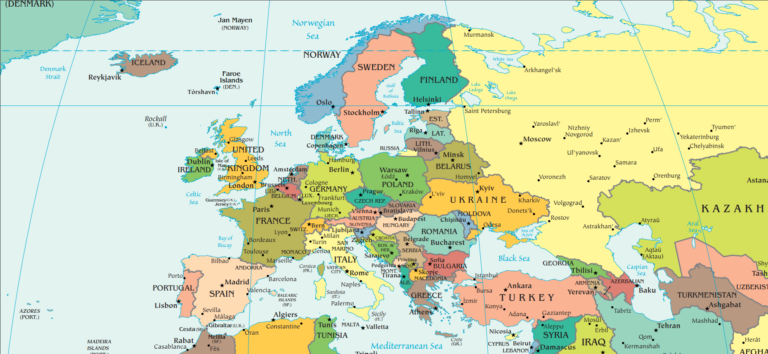 How Georgia’s Labour Market Compares with Its Eastern Neighbours and the EU: Highest Unemployment, Highest Youth UnemploymentHow does Georgia's labour market compare with its neighbours? Eurostat's statistics for the EU's Eastern Neighbourhood show that in 2021 Georgia had the highest unemployment rate and the…
 Georgia Wire: Q2 2026 Labour Force Survey — Unemployment Falls to 13.8%, but Fewer People Are in WorkGeostat's second-quarter 2026 Labour Force Survey shows unemployment down to 13.8%. But participation fell faster, and the employment rate dropped to 46.0%. For the second quarter running, the…
 GILS Decent Work Scorecard for Georgia: 15 Indicators, Sourced — and Why We Withdrew a Single-Number IndexAn earlier version of this page presented a single "Decent Work Index" score for Georgia. GILS could not document the methodology and data behind that score to the…
 Why Georgia Needs Independent Labour Research: The Evidence Gaps — and the Standards GILS Holds Itself ToGeorgia makes consequential decisions about wages, labour law and social protection with significant gaps in the evidence. In reviewing every article on this site against primary sources during…
Sources for this page
- ETF–Eurofound (2024). Working life in Georgia. etf.europa.eu
- Geostat (2026). Labour Force Survey: labour force indicators; by region; by urban/rural area; employment by economic activity; employment status; long-term unemployment; reasons for inactivity; labour underutilisation. geostat.ge
- European Training Foundation (2020). Georgia: Education, training and employment developments 2020.
- European Training Foundation (2022). Labour market policies: Georgia.
- ILO Employment Policy Gateway. Georgia: National Strategy 2019–2023 for Labour and Employment Policy.
- Tbilisi State University (2021). Research on state employment policy in Georgia, citing Government Resolutions No. 732 (2014), No. 167 (2016) and No. 662 (2019), and the Law on Employment Promotion (2020). dspace.tsu.ge
- Pignatti, C. (2026). Recent trends on informal employment in Georgia. ILO Working Paper 159.
- IMF (2026). Georgia: Selected Issues. Country Report 2026/134.
Figures are from the GILS Evidence Register and the official sources shown. GILS is independent of government, trade unions, employers' organisations and the ILO.