ILO instruments on safety and health at work
Every ILO convention, recommendation and guideline on occupational safety and health, grouped as the ILO groups them, with Georgia's ratification status.
Last updated: 3 October 2026
Overview
The ILO organises its instruments on safety and health at work in five groups: the two fundamental conventions, general-scope instruments, risk-specific instruments, sector-specific instruments, and codes of practice. The lists below follow the ILO's own grouping on its Safety and health at work portal; each instrument links to its text in NORMLEX. Georgia's status is as recorded by the ILO: of the conventions listed here, Georgia has ratified none.
Fundamental
| Instrument | Subject | Georgia |
|---|---|---|
| Occupational Safety and Health Convention, 1981 (No. 155) | National OSH policy; employer duties; workers' rights; fundamental since 2022 | Not ratified |
| Occupational Safety and Health Recommendation, 1981 (No. 164) | Guidance accompanying No. 155 | — |
| Promotional Framework for OSH Convention, 2006 (No. 187) | National policy, system, programme and profile; fundamental since 2022 | Not ratified |
| Promotional Framework for OSH Recommendation, 2006 (No. 197) | Guidance accompanying No. 187 | — |
General scope
| Instrument | Subject | Georgia |
|---|---|---|
| Protocol of 2002 to the Occupational Safety and Health Convention, 1981 | Recording and notification of occupational accidents and diseases | Not ratified |
| Occupational Health Services Convention, 1985 (No. 161) | Occupational health services for all workers | Not ratified |
| Occupational Health Services Recommendation, 1985 (No. 171) | Guidance accompanying No. 161 | — |
| List of Occupational Diseases Recommendation, 2002 (No. 194) | National lists of occupational diseases; the ILO list (revised 2010) | — |
| Protection of Workers' Health Recommendation, 1953 (No. 97) | Technical measures, medical examinations, notification of diseases | — |
| Welfare Facilities Recommendation, 1956 (No. 102) | Feeding, rest and recreation facilities | — |
Risk-specific
| Instrument | Subject | Georgia |
|---|---|---|
| Radiation Protection Convention, 1960 (No. 115) | Ionising radiation | Not ratified |
| Occupational Cancer Convention, 1974 (No. 139) | Carcinogenic substances and agents | Not ratified |
| Working Environment (Air Pollution, Noise and Vibration) Convention, 1977 (No. 148) | Air pollution, noise, vibration | Not ratified |
| Asbestos Convention, 1986 (No. 162) | Safety in the use of asbestos | Not ratified |
| Chemicals Convention, 1990 (No. 170) | Safety in the use of chemicals at work | Not ratified |
| Prevention of Major Industrial Accidents Convention, 1993 (No. 174) | Major hazard installations | Not ratified |
| Guarding of Machinery Convention, 1963 (No. 119) | Machine guarding | Not ratified |
| Maximum Weight Convention, 1967 (No. 127) | Manual transport of loads | Not ratified |
| Benzene Convention, 1971 (No. 136) | Protection against benzene | Not ratified |
| White Lead (Painting) Convention, 1921 (No. 13) | White lead in painting | Not ratified |
Sector-specific
| Instrument | Subject | Georgia |
|---|---|---|
| Hygiene (Commerce and Offices) Convention, 1964 (No. 120) | Hygiene in commerce and offices | Not ratified |
| Safety and Health in Construction Convention, 1988 (No. 167) | Construction sites | Not ratified |
| Safety and Health in Mines Convention, 1995 (No. 176) | Mines | Not ratified |
| Safety and Health in Agriculture Convention, 2001 (No. 184) | Agriculture | Not ratified |
Related instruments covered elsewhere on this site: the Labour Inspection Conventions No. 81 and No. 129, the Nursing Personnel Convention No. 149 and the Violence and Harassment Convention No. 190; see ILO conventions ratified by Georgia.
Codes of practice and guidelines
ILO codes of practice are non-binding technical guidance adopted by tripartite meetings, for example on safety and health in construction, in mines, in agriculture, in the use of chemicals, and on recording and notification of occupational accidents and diseases. The Guidelines on occupational safety and health management systems (ILO-OSH 2001) are the ILO's reference for workplace-level systems and are compatible with ISO 45001. Codes of practice are listed on the ILO portal.
What ratification would mean
Ratifying Conventions No. 155 and No. 187, the subject of the ILO's global ratification campaign, would commit Georgia to a national OSH policy, system and programme, a published national profile, reliable statistics, and reporting to the ILO supervisory bodies. The Protocol of 2002 would add a recording and notification system for accidents and diseases, which is the element Georgia's data most lack. See International standards and Georgia.
Public health perspective (WHO)
WHO's instruments are not conventions but World Health Assembly resolutions and technical guidance: the Global Strategy on Occupational Health for All (WHA49.12, 1996), the Global Plan of Action on Workers' Health (WHA60.26, 2007), and joint WHO–ILO products — the International Chemical Safety Cards, the health-worker framework and guide, and the Joint Estimates. They bind through health policy rather than ratification. Workers' health: the public health perspective.
Sources
- ILO. Safety and health at work — topic portal (normative instruments). www.ilo.org
- ILO NORMLEX. Ratifications for Georgia. normlex.ilo.org
- ILO (2023). Fundamental conventions on occupational safety and health. www.ilo.org
Figures are from the GILS Evidence Register and the official sources shown. GILS is independent of government, trade unions, employers' organisations and the ILO.
In this section
← OSH hubTwo perspectives: ILO and WHO · National OSH Profile · Normative instruments · International standards · Law and institutions · Accidents and deaths · Occupational diseases · Chemical hazards · Noise, vibration and radiation · Ergonomics and musculoskeletal disorders · Psychosocial risks at work · Construction · Mining · Agriculture · Heat and climate · Health workers · Infection and sharps · Violence · Health workers: burn-out · Women at work · Young and older workers · Workplace action and training
GILS analyses on this topic
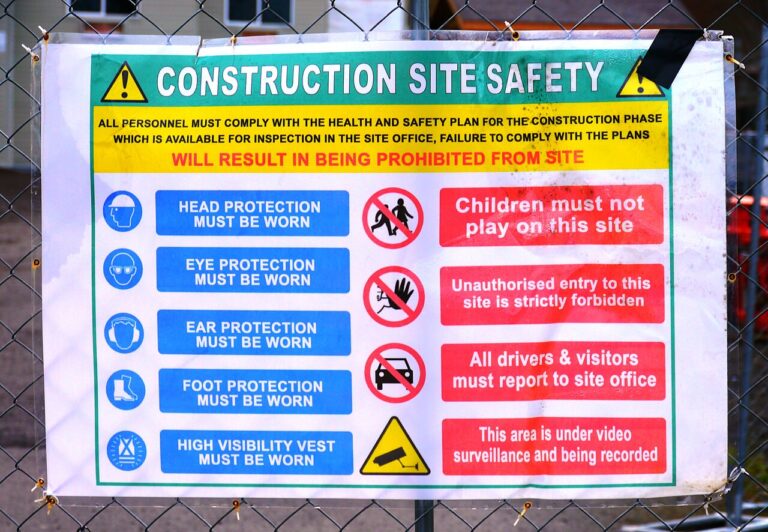 Labour Inspection in Georgia Five Years After the Full Mandate: More Inspections, an Unratified Convention — and the Evidence Still MissingGeorgia's Labour Inspection Service has had a full mandate only since 2021. Inspections have grown fast, but Convention No. 81 is still unratified, staffing data are out of…
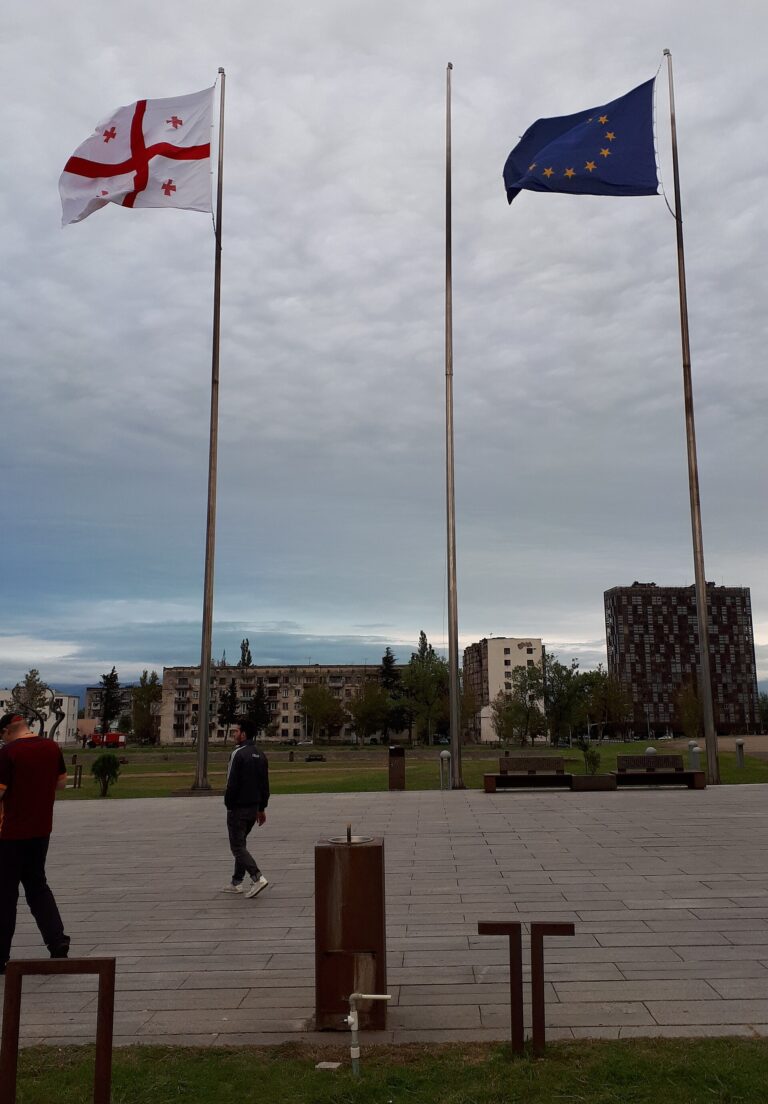 Georgia Wire: Parliament Hears the Labour Inspection Service’s 2025 Report — Five Years After the Full MandateParliament's Economic Policy Committee has heard the Labour Inspection Service's report for 2025: 7,111 inspections, 3,709 facilities inspected for the first time, and a reported 46% fall in…
 Georgia Has Not Ratified the ILO’s Fundamental Safety Conventions: Why C155 and C187 MatterIn 2022 the International Labour Conference made a safe and healthy working environment a fundamental principle and right at work, raising the ILO's two framework conventions on occupational…
 Georgia Wire: 32 Workplace Deaths in 2025, Two-Thirds in Construction — What the Labour Inspection Data ShowThe Labour Inspection Service recorded 32 workplace deaths and 179 injuries in 2025, and reported a 46% fall in fatal accidents compared with the previous year. Construction accounted…