Young and older workers
Young workers suffer more injuries; older workers more disease. Georgia's rules for minors, the ILO evidence, and what is not measured.
Last updated: 3 October 2026
Overview
Young workers aged 15–24 make up more than 15% of the world's labour force and suffer up to a 40% higher rate of non-fatal occupational injuries than adults over 25, because of inexperience, lack of training and the sectors they enter (ILO, 2018). Older workers carry the disease burden of a working life — in the WHO/ILO Joint Estimates, work-related deaths concentrate among those over 54 (WHO and ILO, 2021). In Georgia, youth unemployment is 23.7% (ages 15–24, 2025) and 23.4% of 15–29-year-olds are not in employment, education or training (Geostat); those who do work are concentrated in services, construction and informal work.
Key figures
Up to 40%
Higher rate of non-fatal occupational injuries among young workers than adults over 25
ILO (2018)
541 million
Young workers (15–24) worldwide, more than 15% of the labour force
ILO (2018)
16 · 18
Minimum age for employment, and for hazardous work, in Georgia
Labour Code
23.7%
Youth unemployment rate (15–24), 2025
Geostat
Rules for minors in Georgia
- Employment is permitted from 16; from 14 only for light work with parental consent (Labour Code).
- Hazardous, heavy and harmful work and night work are prohibited under 18.
- Georgia has ratified ILO Conventions No. 138 (minimum age, specified at 15) and No. 182 (worst forms of child labour).
- See the dictionary entry child labour and Youth, Skills & Education.
Older workers
- Georgia's pension age is 65 for men and 60 for women; many continue working in agriculture and self-employment beyond it.
- Older workers face higher risks from heat, shift work and physical load, and bear the accumulated burden of occupational disease, which Georgia does not record.
- The accident record does not publish age breakdowns in accessible sources.
Public health perspective (WHO)
WHO's Global Plan of Action asks for workers' health policies that address the life course, and its Healthy Ageing framework treats work in later life as a health determinant. For young workers WHO stresses training and supervision; for older workers, health surveillance and adapted work. Neither age group is visible in Georgia's occupational health data. Workers' health: the public health perspective.
Data gaps
- No age breakdown of occupational accidents in published sources.
- No data on injuries among apprentices, interns or seasonal young workers.
- No data on work beyond pension age by sector or on its health effects.
Sources
- ILO (2018). Improving the safety and health of young workers (World Day 2018 report). www.astrid-online.it
- Solidarity Center (2020). World Day for Safety and Health at Work: young workers. solidaritycenter.org
- WHO and ILO (2021). Almost 2 million people die from work-related causes each year. www.who.int
- Geostat (2026). Labour force indicators by age. www.geostat.ge
- ETF–Eurofound (2024). Working life in Georgia. www.etf.europa.eu
Figures are from the GILS Evidence Register and the official sources shown. GILS is independent of government, trade unions, employers' organisations and the ILO.
In this section
← OSH hubTwo perspectives: ILO and WHO · National OSH Profile · Normative instruments · International standards · Law and institutions · Accidents and deaths · Occupational diseases · Chemical hazards · Noise, vibration and radiation · Ergonomics and musculoskeletal disorders · Psychosocial risks at work · Construction · Mining · Agriculture · Heat and climate · Health workers · Infection and sharps · Violence · Health workers: burn-out · Women at work · Young and older workers · Workplace action and training
GILS analyses on this topic
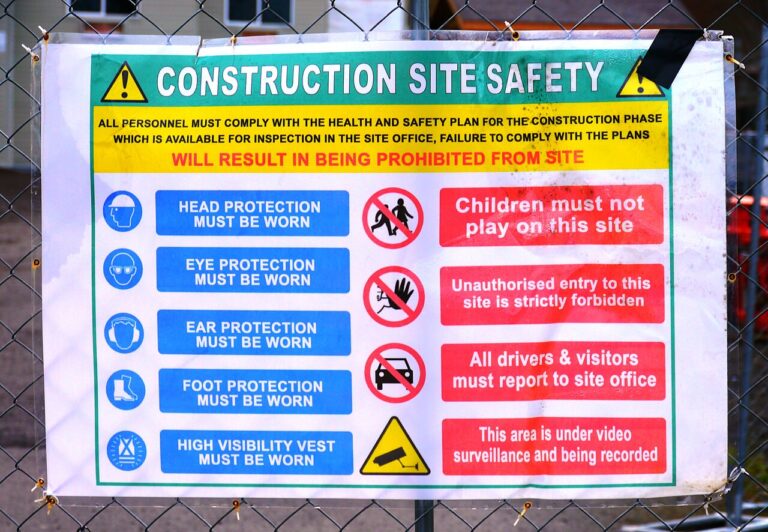 Labour Inspection in Georgia Five Years After the Full Mandate: More Inspections, an Unratified Convention — and the Evidence Still MissingGeorgia's Labour Inspection Service has had a full mandate only since 2021. Inspections have grown fast, but Convention No. 81 is still unratified, staffing data are out of…
 Georgia Wire: Parliament Hears the Labour Inspection Service’s 2025 Report — Five Years After the Full MandateParliament's Economic Policy Committee has heard the Labour Inspection Service's report for 2025: 7,111 inspections, 3,709 facilities inspected for the first time, and a reported 46% fall in…
 Georgia Has Not Ratified the ILO’s Fundamental Safety Conventions: Why C155 and C187 MatterIn 2022 the International Labour Conference made a safe and healthy working environment a fundamental principle and right at work, raising the ILO's two framework conventions on occupational…
 Georgia Wire: 32 Workplace Deaths in 2025, Two-Thirds in Construction — What the Labour Inspection Data ShowThe Labour Inspection Service recorded 32 workplace deaths and 179 injuries in 2025, and reported a 46% fall in fatal accidents compared with the previous year. Construction accounted…